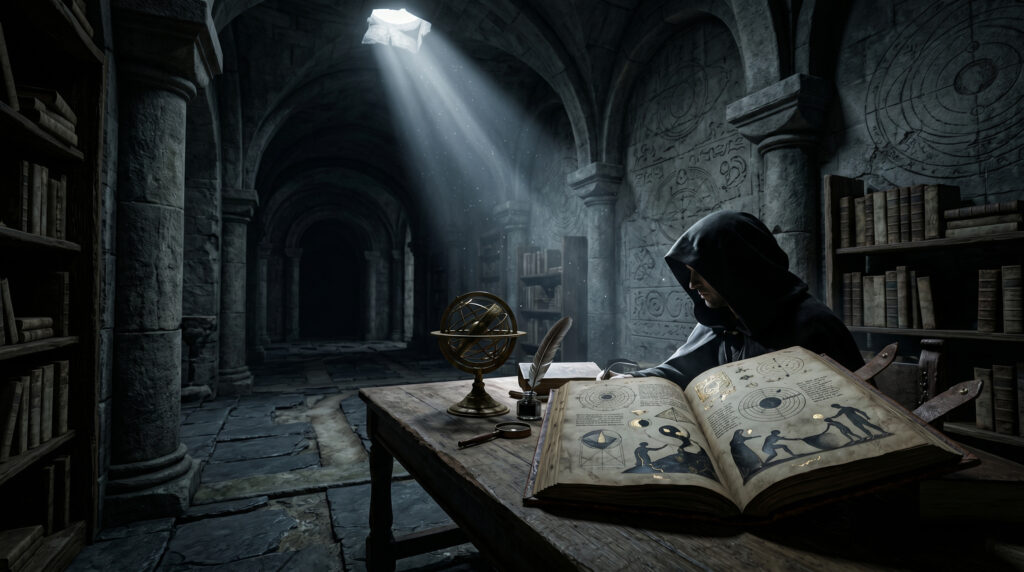
In an age defined by the relentless hum of information, silence has become the most precious of commodities. It is not merely the absence of sound; it is a vital, expansive space where the mind can finally rest, recalibrate, and encounter its own depth. To find silence is not to escape the world, but to cultivate a sanctuary within it—a necessary act of architecture for the modern soul.
The Geometry of Stillness
Silence functions as the negative space in the architecture of our existence. Just as a well-designed room requires open areas to allow for movement and perspective, the mind requires periods of quiet to parse experience and generate original thought. When we saturate our lives with constant input, we lose the structural integrity that only silence can provide.
Practicing the Architecture of Stillness
To begin building this space, one must first learn to distinguish between “empty” noise and “intentional” quiet.
- Audit the Environment: Identify one daily source of background noise that serves no purpose to your creative or mental health and remove it.
- Create a Buffer: Carve out a ten-minute window each day—entirely free of digital devices—to allow your thoughts to settle without the pressure of an output.
- Observe the Shift: Notice how your perspective on a singular problem changes when you view it from a place of stillness rather than a state of constant reaction.
True silence is not dependent on the absence of external noise; it is a portable architecture of the mind. We build this internal room through the intentional selection of where we direct our attention. By treating our mental energy as a finite resource, we can construct boundaries that protect our focus, ensuring that even in a chaotic world, we maintain a central space of quietude that remains untouched.
Silence is the foundation upon which all meaningful work is built. It is in the quiet that we find the capacity to see clearly and create with purpose.
If you were to dedicate one room in your home—or one hour of your day—entirely to silence, what would that space look like, and how might it change the way you approach your creative work? We invite you to sit with that question, and perhaps share your path to stillness below.